The problem
Titles and thumbnails came from separate AI chats, one per show, each set up by a different person. The rules lived in people's heads. Quality moved with whoever did the work, and a lesson learned in one chat never reached the others.
What the workflow does
A transcript goes in. Three titles, three overlay texts, three image prompts and three finished images come out. Each speaker maps to a verified photo through a reference map, since automatic transcripts misspell names. Images are measured from the file, not judged by eye.
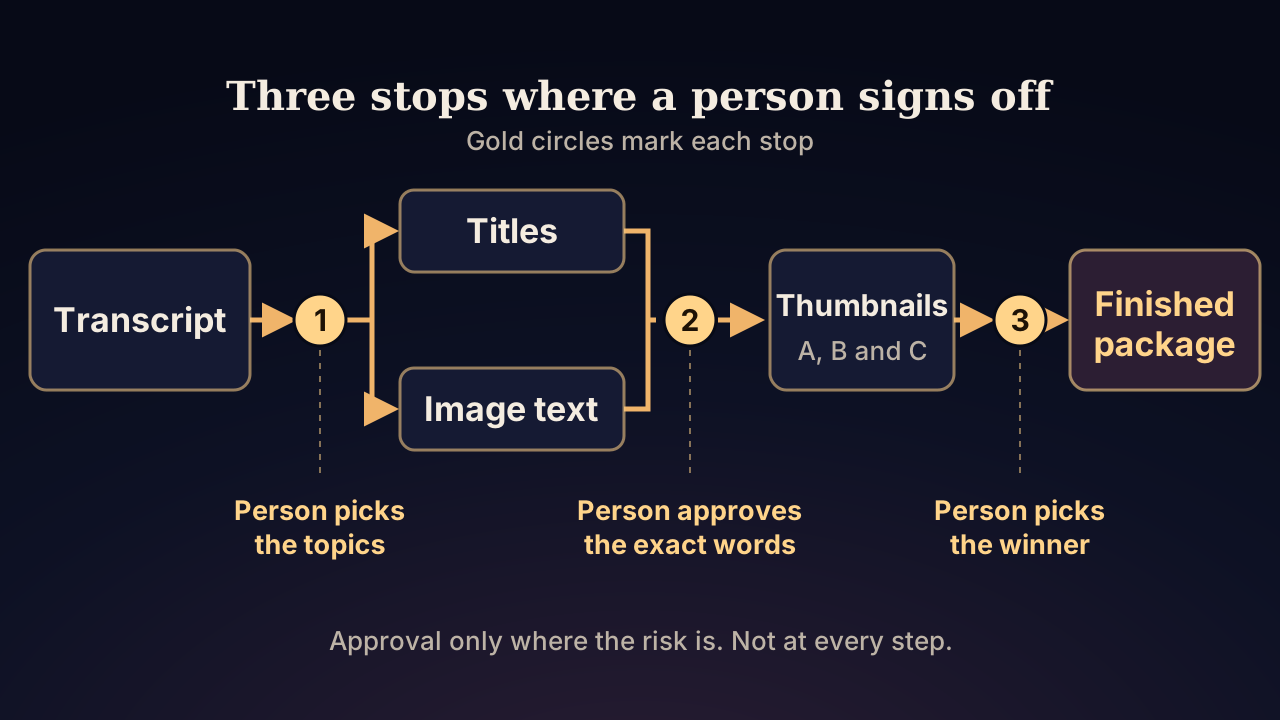
Where a person signs off
- Confirming which three topics are worth packaging.
- Approving the exact title and overlay words before any image is made.
- Picking the winner of options A, B and C.
These are the points that carry risk. A process that asks for approval at every step gets bypassed within a month.
A correction becomes a rule
When the team flagged an episode that shipped without the presenter's face, the fix went into the configuration as a rule, not into a message. Another rule changed after I measured 32 shipped overlays. Line count predicts overlay height, and character count barely does. The first version of the rule pointed the fix the wrong way.
What it produced
From June to August 2026 it packaged every episode that arrived in time across three shows: 535 images in 82 dated video folders over 66 delivery dates.
What it does not show
Nobody timed the old process, so I have no time-saved figure and will not invent one. The image download and the final logo pass stay manual by choice. The engagement has ended.
